
Choose how your products and events are shown
Pick the shelf your catalog sits on, and the stage your events take.
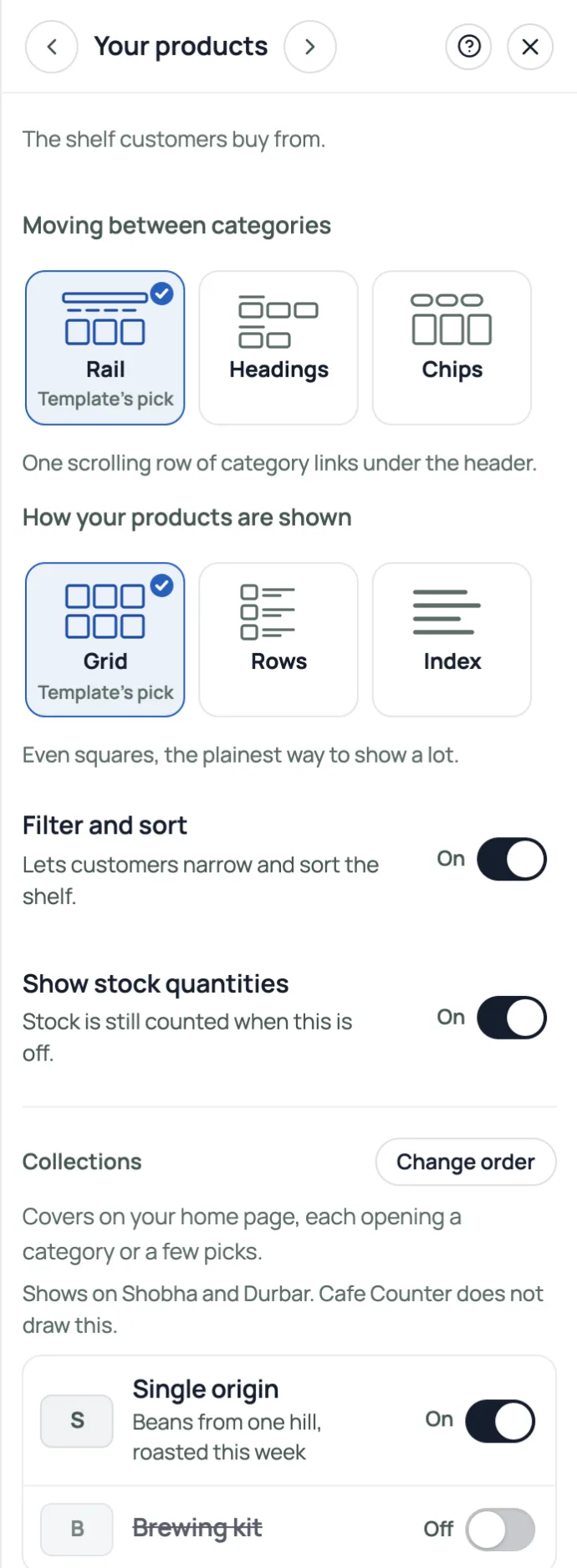
Your template suggests a layout, but you do not have to accept it. Open Design and tap your products in the preview, or choose Your products from Parts of your shop. Its choices open beside the preview as small pictures: how shoppers move between categories, and how your products are shown. The one your template uses says Template's pick. Pick another and it sticks, whatever template you switch to later. Only the choices your template was drawn around are offered, so you may not see every option listed here.
Products
- The one marked Template's pick follows whatever your template suggests.
- Lookbook: tall images with room to breathe. Good for clothing.
- Rows: photo left, name and price right. Fast to scan.
- Shelf: scrolls sideways per category on a phone.
- Grid: even squares, the plainest way to show a lot.
- Gallery: one big picture at a time, with a floating info bar.
- Index: names in big type, no photos. Hover to see one.
Moving between categories
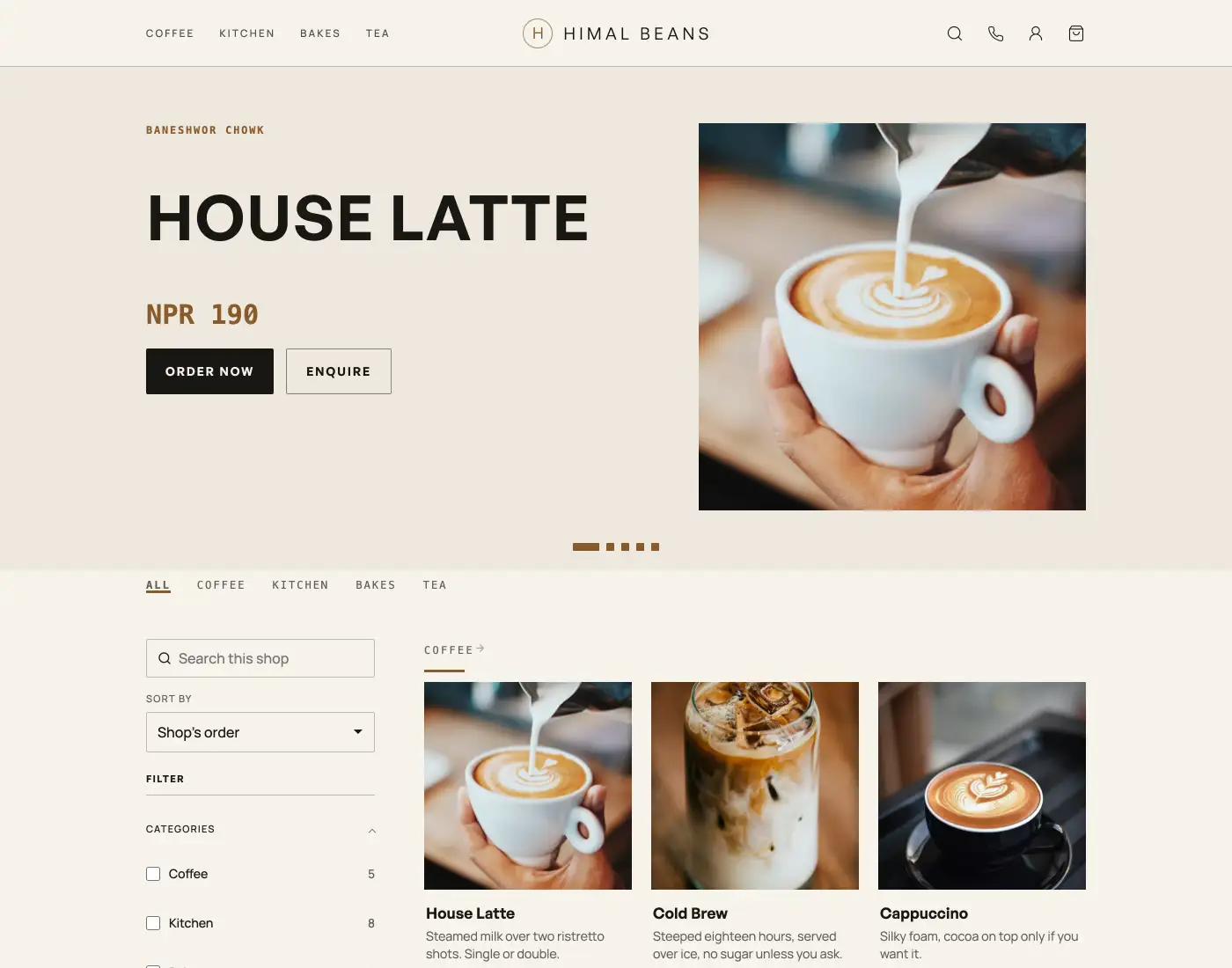
How a shopper gets from one part of your shelf to another, with four ways to do it. Headings runs every category down the page under its own heading. On the shop front each category is a sideways row, with See more opening that category's own page when there are more items than the row can hold. Rail puts one scrolling row of category links under the header; Cards gives each category a picture that opens its own page; and Chips is a filter row that swaps the products in place. Each is a small picture, and the one your design uses says Template's pick under it. Choose that one to let your design decide; choose another and it sticks, whatever design you change to later.
Events
Three stages: Cards (poster on top, details underneath), Poster wall (big artwork with the details laid over it) and Agenda (one row per night, date first, best for a long season). Nothing is lost between them; the same details move into a different shape.
- Scan a barcode with your phone cameraPoint the phone at a packet and the counter adds it. Stocking a shelf works the same way, one scan per packet.
- Manage your catalogAdd products, photos, prices, and take items off the shelf when you are out of stock.
- Add a product from a photoTake or choose a photo on the Add a product screen and Zuno fills in a name, a short description and a category. You check them and type the price.